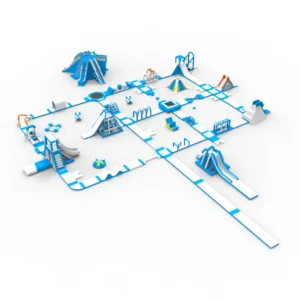
Inflatable Water Park Installation Guide: How to Set Up in the Sea

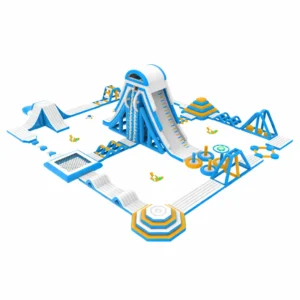
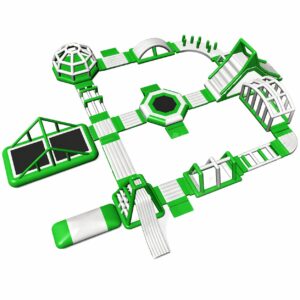
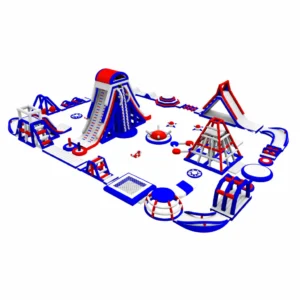
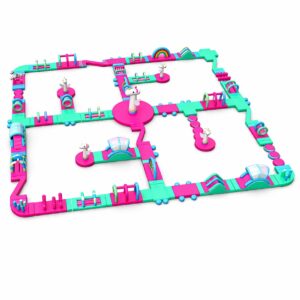
Imagine a floating playground bobbing on turquoise waves—slides, trampolines, climbing walls, and obstacle courses—all anchored safely in the sea. Sea-based inflatable water parks (also called aqua parks or floating obstacle courses) have exploded in popularity. They attract tourists, boost local economies, and create unforgettable social media moments.
But setting one up in the ocean is very different from a lake or river. The sea brings tides, currents, saltwater corrosion, and marine life considerations.
Our installation process strictly follows the ISO 25649 safety standards for floating leisure items. This guide walks you through the exact process, from feasibility studies and permits to anchoring systems, safety protocols, and seasonal maintenance.
1. Pre-Feasibility Study: Is the Sea Right for You?
Before buying a single inflatable, conduct a site assessment. Not every coastline works.
Key factors to evaluate:
- Water depth: 3–5 meters (10–16 feet) at low tide is ideal. Too shallow, and users hit the seabed. Too deep, and anchoring becomes complex.
- Wave height: Average wave height should be under 0.5 meters (1.6 feet). Use historical wave buoy data.
- Current speed: Less than 0.5 knots (0.25 m/s). Strong currents rip anchors and exhaust swimmers.
- Tidal range: If your tidal range exceeds 2 meters, your park will lift and drop significantly. Design flexibility is required.
- Nearby boat traffic: You need a 50–100 meter exclusion zone around the park.
- Water quality: Check for fecal coliform, jellyfish blooms, and sharp rocks.
Pro tip: Hire a marine surveyor. They’ll produce a report lawyers and insurers will demand later.
2. Legal & Permitting (The Hardest Step)
Setting up an inflatable water park in the sea requires multiple permits. Start 9–12 months before your planned opening.
Typical permits needed:
| Permit Type | Issuing Authority |
|---|---|
| Marine lease / seabed license | State or federal marine agency |
| Coastal construction permit | Coastal zone management |
| Navigation safety waiver | Coast guard / maritime authority |
| Business operator license | Local municipality |
| Environmental impact assessment | Environmental agency |
Real-world example: In the UK, you need a Marine Licence from the Marine Management Organisation (MMO). In the US, the Army Corps of Engineers and Coast Guard get involved.
Warning: Operating without permits can lead to daily fines of $10,000+ and immediate shutdown.
3. Choosing the Right Sea-Ready Inflatable Modules
Not all inflatable water parks are built for saltwater. Look for these sea-specific features:
- UV-resistant, saltwater-proof PVC (1100–1300 denier, 0.9mm thickness minimum)
- Reinforced seams (high-frequency welded, not glued)
- Anti-slip surface texture (essential when wet and salty)
- Multiple air chambers (safety: if one punctures, others keep it afloat)
- Marine-grade stainless steel D-rings and valves
- Colorfastness (tropical sun fades cheap materials in 2 months)
Recommended layout for sea parks:
- Zone A (shallow): Kids’ area – small slides, trampolines, balance beams
- Zone B (moderate): Teens/adults – climbing walls, monkey bars, runways
- Zone C (deep end): Blob jump, high diving platform, giant slide
- Perimeter: Bumper zone – inflatable barriers to prevent drifting out
Estimated investment: A 500m² sea park costs 30,000–80,000 for commercial-grade inflatables.
4. Marine Anchoring Systems (Most Critical Part)
Unlike lakes, the sea pulls constantly. Your anchoring system is the difference between a successful park and a lost one.
Recommended anchor types for sea inflatable parks:
| Anchor Type | Best for | Holding power | Cost |
|---|---|---|---|
| Screw anchors (helical) | Sandy seafloors | Very high | High |
| Claw / Bruce anchors | Rocky or mixed seabed | Medium-high | Medium |
| Gravity anchors (concrete blocks) | Soft mud | Medium | Low |
| Pile anchors (driven steel) | Permanent installations | Extreme | Very high |
Anchoring pattern (grid system):
- Place anchors every 15–20 meters around the perimeter
- Use chain risers (not rope) to prevent chafing on rocks
- Connect inflatable modules with dynamic tension lines (allows vertical tide movement but prevents horizontal drift)
Tide compensation:
Use floating anchor buoys with elastic mooring lines (nylon or polypropylene) that stretch and retract with the tide. Your park should rise and fall 2–3 meters without stressing anchors.
Pro tip: Over-anchor by 30%. It’s much cheaper than finding your park 2 miles down the coast after a storm.
5. Assembly & Launch Procedure
You can’t blow this up on the beach and drag it out. Use this marine assembly method:
Step 1: On-shore partial assembly
- Unroll inflatables on a soft surface (tarpaulin)
- Connect modules using supplied straps and buckles (do not over-tighten)
- Inflate to 80% using commercial blowers (3–5 psi typical)
Step 2: Launch via ramp or crane
- Use a boat ramp for smaller parks
- Use a floating crane for larger parks (500m²+)
- Tow the semi-inflated park to the anchor site using a small boat (10–20 HP)
Step 3: Final anchoring sequence
- Deploy anchors first (using a dive team if necessary)
- Attach mooring lines to park’s D-rings
- Inflate to 100% (check pressure daily with a manometer)
- Adjust tension lines so the park sits level
Team required: 6–8 people (including 2 certified divers) for a 1-day setup.
6. Daily & Seasonal Operational Safety
Sea parks wear faster than freshwater parks. You need daily checks and seasonal deep maintenance.
Daily checklist (before opening):
- Walk/float the entire perimeter – check for punctures, tears, loose stitching
- Measure anchor line tension – adjust if any line is slack or over-tight
- Inspect all valves and blower connections
- Check for marine growth (barnacles, algae) on anchor chains – scrape if needed
- Test water clarity and current speed (using a current meter)
Lifeguard requirements (sea-specific):
- Minimum 1 lifeguard per 25 users
- Lifeguards must be trained in open-water rescue (pool certification is not enough)
- Provide rescue kayaks or jet skis – not just stand-up boards
- Install a floating lifeguard tower at the deep end
Storm protocol:
- If wind exceeds 20 knots or swell exceeds 1 meter → close the park immediately
- Partially deflate and anchor additional storm lines
- In hurricane/tropical storm zones: fully deflate, roll up, and store on land
7. Maintenance & Corrosion Management
Saltwater destroys inflatables quickly if ignored.
Monthly maintenance:
- Rinse all PVC with fresh water (use a pressure washer – gentle setting)
- Apply UV and saltwater protectant spray (303 Aerospace or similar)
- Lubricate stainless steel buckles and D-rings with marine grease
- Dive check all anchors and chains (replace any with >10% rust)
Annual overhaul:
- Send inflatables to a certified repair facility for seam testing
- Replace all mooring lines (even if they look fine – UV degrades nylon invisibly)
- Re-coat anchor chains with galvanizing compound
- Update risk assessment and emergency action plan
Expected lifespan in sea: 3–5 years for commercial-grade; 1–2 years for cheap imports.
8. Insurance & Liability (Don’t Skip This)
Sea parks are considered high-risk attractions. Many standard water park insurers will decline coverage.
What you need:
- Marine liability insurance – minimum $2 million aggregate
- Product liability – covers inflatable manufacturer defects
- Environmental pollution – in case of accidental deflation or debris release
- Search and rescue rider – for potential open-water rescues
Annual premium estimate: 5,000–15,000 depending on location and capacity.
Real talk: Some operators require a signed waiver for every user, parent permission for minors, and a mandatory 5-min safety video before entry.
9. Marketing Your Sea Inflatable Park
Once your park is legally and physically ready, you need visitors. Sea parks sell themselves visually, but you need smart SEO and local marketing.
SEO tips for your website:
- Target keywords: “inflatable water park in the sea,” “floating obstacle course [your city],” “ocean aqua park”
- Create location pages: “Best sea water park in [Beach Name]”
- Use schema markup for local business and events
- Embed a live tide and weather widget (shows you operate safely)
Local marketing:
- Partner with beachfront hotels and resorts (offer 15% commission)
- Run Instagram and TikTok ads showing drone footage of your park
- Host sunrise yoga (on the inflatable park – serious photo op)
- Offer night sessions with waterproof LED lights
10. Real-World Costs & ROI (2026 Estimates)
| Item | Low range | High range |
|---|---|---|
| Inflatable park (500m²) | $30,000 | $80,000 |
| Marine anchoring system | $8,000 | $25,000 |
| Permits & surveys | $5,000 | $20,000 |
| Lifeguards (seasonal) | $15,000 | $40,000 |
| Insurance (annual) | $5,000 | $15,000 |
| Daily operations (staff/rent) | $20,000 | $50,000 |
| Total first-year cost | $83,000 | $230,000 |
Revenue potential (100-day season, 50% capacity of 100 users/day):
- Ticket: $25 per 1-hour session
- Daily revenue: $2,500
- Seasonal revenue: $250,000
- ROI: 1–2 seasons (if managed well)
Final Checklist Before You Launch
✅ Marine survey completed
✅ All federal/state/local permits obtained
✅ Sea-rated inflatables purchased (not lake-grade)
✅ Professional anchoring system installed
✅ Lifeguards with open-water certification hired
✅ Insurance policy with marine rider in force
✅ Storm and emergency plan written & practiced
✅ Website live with local SEO content
Setting up an inflatable water park in the sea is not a casual weekend project. It requires marine engineering, legal navigation, and serious safety investment. But for those who do it right, the reward is a floating paradise that guests will travel hundreds of miles to experience.
If you’re ready to move forward, start with that marine survey – everything else flows from there.
Explore More Inflatable Water Park Guides
Learn more about inflatable water park investment, design options, and professional manufacturers to help you plan a successful project.
Explore our solutions:
- Inflatable Water Park Manufacturer
- Inflatable Water Park for Sale
- Custom Inflatable Water Park
- Lake Inflatable Water Park
- Ocean Inflatable Water Park
- Inflatable Water Park Modules
- Inflatable Water Park Cost
- Inflatable Water Park
-

Commercial Inflatable Water Obstacle Course – Floating Aqua Park A7-99
-
Commercial Inflatable Water Playground for Resorts & Aqua Parks
-
Floating Water Park – 44×32M Commercial Aqua Park B22-12
-
Giant 48.6m Inflatable Water Park – Commercial Floating Obstacle Course for 100+ Guests
-
Giant Inflatable Floating Water Park for Resort & Lake (100 Persons Capacity) WP07
-
Giant Inflatable Water Park – 95×69.6M Commercial Aqua Park B25-44