What Is EN ISO 25649? A Complete Guide to the Inflatable Water Safety Standard
As summer approaches, millions of people flock to pools, lakes, and beaches with inflatable rafts, floating islands, and water loungers. But have you ever wondered how manufacturers ensure these products won’t tip over, leak dangerous substances, or trap a child underwater?
EN ISO 25649 is the harmonized European standard that answers that question. Officially titled “Floating leisure articles for use on and in the water,” this standard is the benchmark for safety, quality, and performance for non-toy floating products.
If you are a manufacturer, importer, or retailer selling water floats in the EU, understanding EN ISO 25649 isn’t just best practice—it is often a legal requirement for compliance with the General Product Safety Regulation (GPSR).
Here is everything you need to know about the new 2024/2025 updates, the classification system, and the testing requirements.
What Is EN ISO 25649?
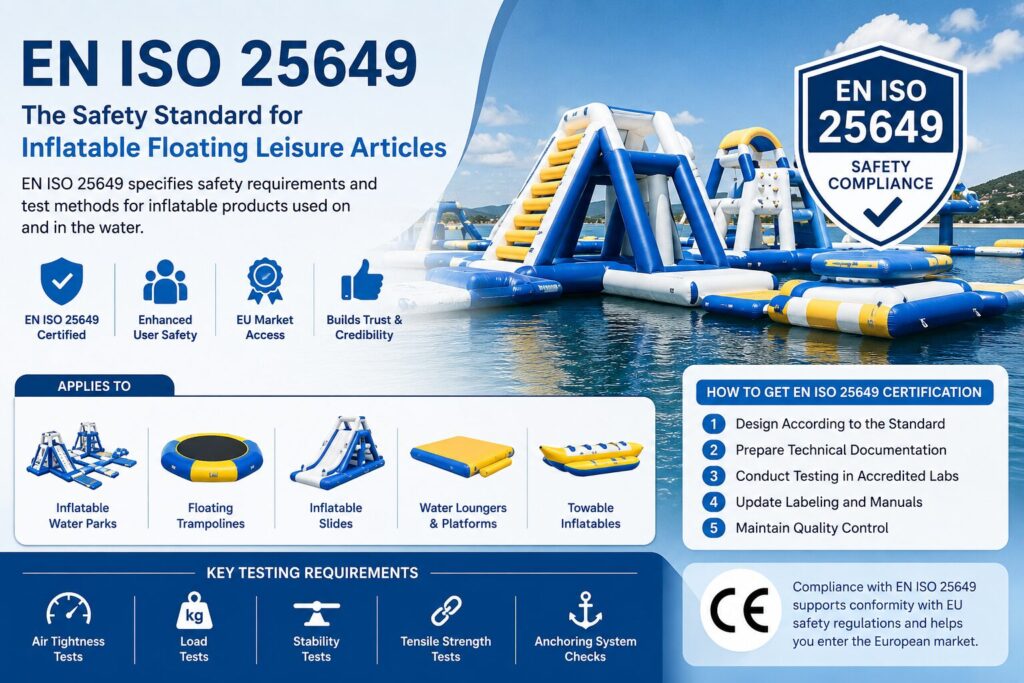
EN ISO 25649 is a European-adopted international standard that specifies safety requirements and test methods for inflatable floating leisure articles. These products are typically used in swimming pools, lakes, or calm coastal waters.
The standard was developed by the International Organization for Standardization and adopted in Europe through the European Committee for Standardization.
It applies to products such as:
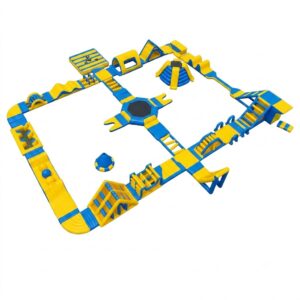
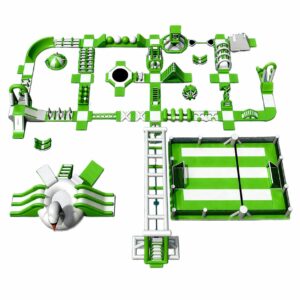
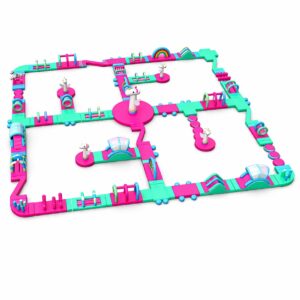
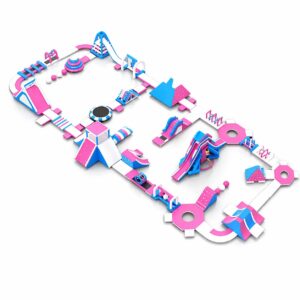
- Inflatable water parks
- Floating trampolines
- Inflatable slides
- Water loungers and platforms
- Towable inflatables (in some parts)
Why EN ISO 25649 Matters
1. Ensures Product Safety
The standard sets strict requirements for:
- Structural integrity
- Stability on water
- Load capacity
- Resistance to punctures and tearing
This reduces risks like capsizing, deflation, or user injury.
2. Required for EU Market Access
For many inflatable water products sold in the European Union, compliance with EN ISO 25649 supports conformity with broader directives like the General Product Safety Directive.
Without compliance, your product may face:
- Customs rejection
- Legal penalties
- Product recalls
3. Builds Customer Trust
Buyers—especially commercial operators—often require proof of certification before purchasing. Compliance signals professionalism and reliability.
The 7-Part Structure: Understanding the Family
The standard is divided into seven distinct parts. You cannot simply claim compliance to “ISO 25649”; you must meet the requirements of Part 1, Part 2, and the specific Part that matches your product class.
EN ISO 25649-1: General Requirements
This is the “parent” document. It covers classification, materials, and general safety requirements applicable to all floating articles. This includes seam strength, valve security, and resistance to UV degradation.
EN ISO 25649-2: Consumer Information
This part dictates the markings and labeling requirements. It specifies exactly what warnings, symbols, and user instructions must be printed on the product to ensure the user knows it is not a life-saving device.
Parts 3 to 7: Class-Specific Rules (A through E)
This is where the standard gets granular. Depending on the shape and size of your product, it falls into a specific “Class” (A through E). Each Class has a dedicated part outlining unique tests.
- Part 3 (Class A): Large floating islands, giant tubes, large rafts, and floating armchairs.
- Part 4 (Class B): “Figure of 8” shaped articles and rings where the inner diameter is greater than 60cm.
- Part 5 (Class C): Rings, tubes, and donuts (inner diameter less than 60cm) and small rafts.
- Part 6 (Class D): “Water logs” and linear profiles (length greater than width).
- Part 7 (Class E): Any other shapes not covered above.
Critical Changes: The 2024/2025 Revision
If you are currently using the 2017 version of the standard, take note: It is being withdrawn.
The new editions (EN ISO 25649-1:2024 through 7:2024) have been approved, and the transition period ends May 31, 2025.
Here are the top changes that will impact your production line:
1. Increased Weight Load Testing
Previously, stability and buoyancy tests used a test weight of 90 kg (representing a heavy adult). The new standard raises this to 110 kg.
2. Larger Torso Probes (Body Entrapment)
To improve child safety, the torso probe used to test openings (to prevent a child’s body from slipping through and becoming trapped underwater) has been enlarged.
- Impact: Designs with large armholes or intricate webbing must be re-evaluated to ensure the new probe does not pass through.
3. Updated Age Labeling
The standard has shifted from a “Prohibition” pictogram to an “Age Recommendation” pictogram within the mandatory group of markings.
Key Testing Requirements
To meet EN ISO 25649, products must pass rigorous testing, including:
- Air tightness tests – Ensuring no leakage under pressure
- Load tests – Verifying weight capacity
- Stability tests – Preventing overturning
- Tensile strength tests – Material durability
- Anchoring system checks – For large floating structures
These tests are typically conducted by certified third-party laboratories such as SGS or TÜV Rheinland.
EN ISO 25649 vs Other Standards
Many people confuse EN ISO 25649 with other safety standards. Here’s how it differs:
- EN 71 – Focuses on toy safety (mainly for children)
- CE Marking – Indicates conformity with EU legislation, not a standard itself
- ISO 6185 – Applies to inflatable boats, not leisure inflatables
EN ISO 25649 is specifically tailored for floating recreational inflatables, making it the most relevant standard for inflatable water parks and similar products.
Conclusion
As a inflatable water park manufacturer, EN ISO 25649 is more than just a regulatory hurdle—it is the benchmark for how we design, test, and deliver every floating leisure product. By ensuring our inflatable water parks, floating platforms, and recreational inflatables fully comply with this standard (including the latest 2024 updates), we save you from customs risks and liability issues. When you source from us, you don’t just buy a product; you buy a ready-to-sell, EU-compliant solution that builds trust with your end customers.
FAQ
Is EN ISO 25649 mandatory?
It is not always legally mandatory, but it is widely required to demonstrate compliance with EU safety regulations.
Does EN ISO 25649 apply to inflatable water parks?
Yes, it is one of the most important standards for inflatable water parks and floating playgrounds.
How long does certification take?
Typically 2–6 weeks, depending on product complexity and testing requirements.
-

Aqua Obstacle Course – 30×27.8m Commercial Inflatable Water Park B24-7
-
Aqua Park Inflatable Water Games – Commercial Floating Water Playground for Resorts & Lakes
-
Aqua Park with Sport Court & Obstacle Modules-WP01
-
Commercial 100-Person Inflatable Floating Water Park
-
Commercial Floating Aqua Park Resort System (WP08)
-
Commercial Floating Aqua Park System WP02 (30-100 Capacity)