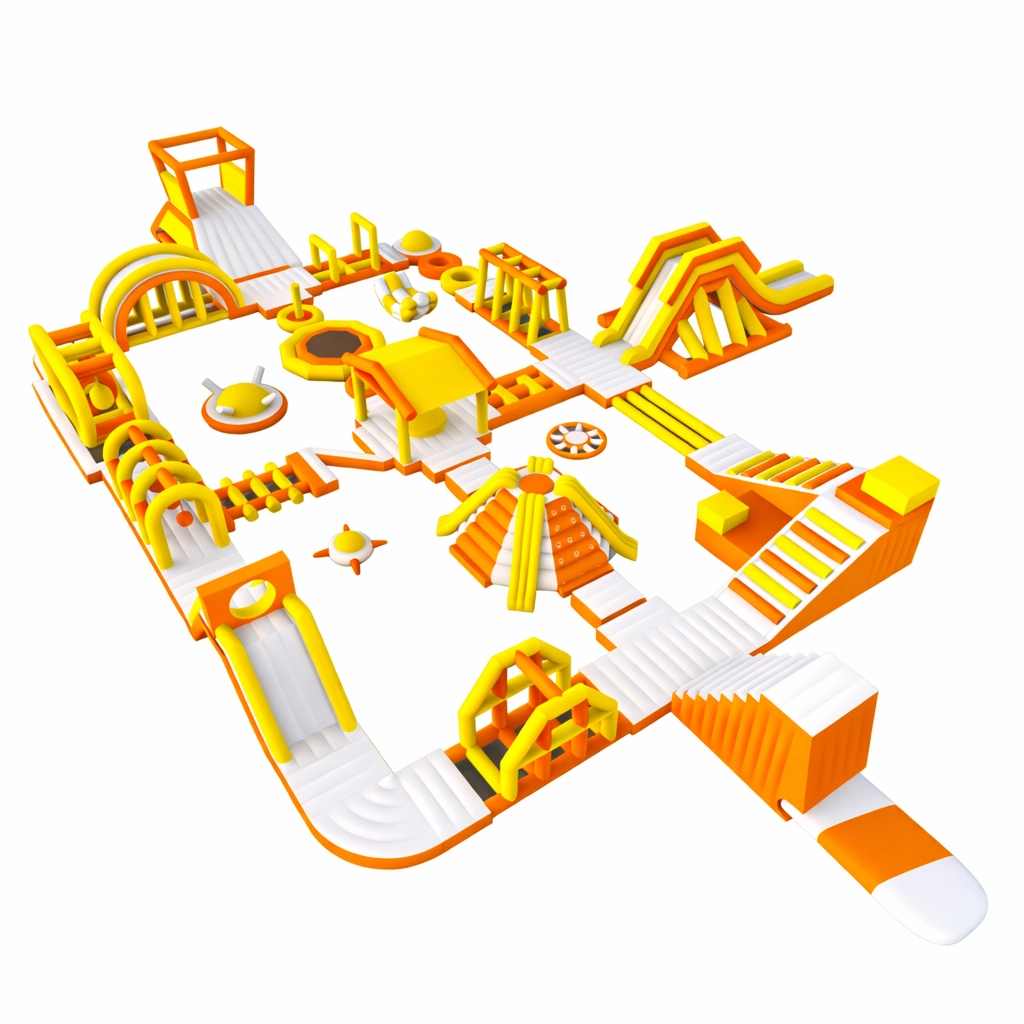
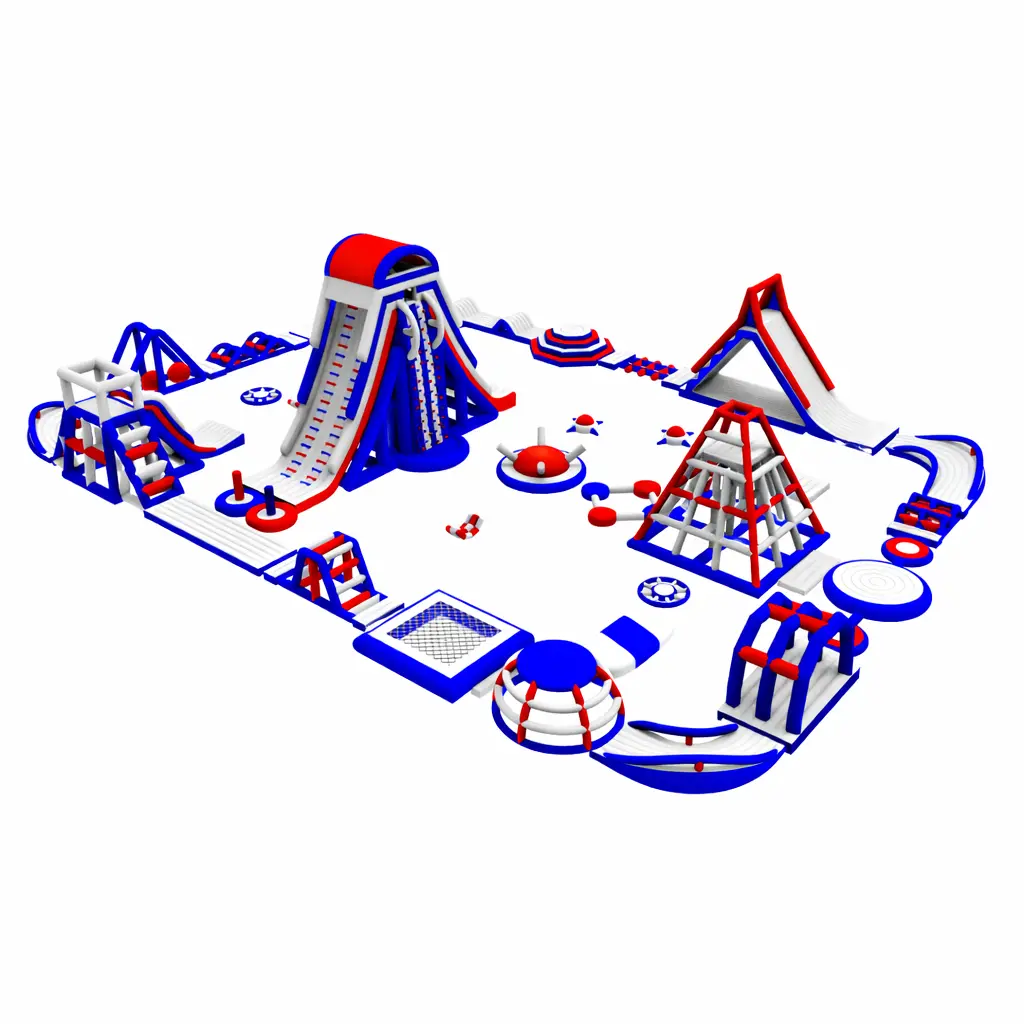
How to Design a Commercial Inflatable Water Park: Capacity & Layout Balance

Commercial inflatable water parks have become one of the fastest-growing attractions for lakes, beaches, resorts, and recreation centers. However, successful water park design is not simply about adding more obstacles. The key to profitability and guest satisfaction lies in balancing visitor capacity, park layout, safety, and user experience.
In this guide, we’ll explore how to design a commercial inflatable water park that maximizes capacity while maintaining smooth traffic flow and a safe, enjoyable experience for guests.
Why Capacity and Layout Matter
Many first-time operators assume that a larger water park automatically generates higher revenue. In reality, poor layout design can lead to overcrowding, long wait times, and safety issues.
A well-designed inflatable water park should:
- Accommodate the target number of visitors
- Provide balanced activity zones
- Minimize congestion
- Improve safety management
- Increase guest satisfaction and repeat visits
- Maximize return on investment (ROI)
The goal is to create a park where guests can move freely and enjoy multiple attractions without excessive waiting.
Step 1: Determine Your Target Capacity
The first step is estimating how many guests will use the park simultaneously.
Typical Commercial Water Park Sizes
| Park Size | Recommended Capacity |
|---|---|
| Small (100–200 m²) | 20–50 users |
| Medium (300–600 m²) | 50–120 users |
| Large (800–1,500 m²) | 120–250 users |
| Mega Park (2,000 m²+) | 250+ users |
Capacity depends on:
- Available water area
- Local demand
- Lifeguard availability
- Budget
- Safety regulations
Avoid exceeding the manufacturer’s recommended capacity.
Step 2: Create a Balanced Activity Mix
A successful inflatable water park offers a variety of challenges and experiences.
Popular Module Categories
Entry-Level Activities
Ideal for children and beginners:
- Floating walkways
- Balance beams
- Stepping pads
- Small slides
Adventure Challenges
Designed for active users:
- Climbing walls
- Monkey bars
- Swing obstacles
- Rope bridges
High-Excitement Features
Create memorable experiences:
- Giant slides
- Blast bags
- Jumping pillows
- Action towers
A balanced combination appeals to wider age groups and keeps guests engaged longer.
Step 3: Design Traffic Flow
One of the most common design mistakes is placing popular attractions too close together.
Recommended Traffic Pattern
A continuous circuit layout works best:
Entrance → Easy Obstacles → Climbing Challenges → Slides → Jump Features → Exit
Benefits include:
- Reduced bottlenecks
- Easier supervision
- Better guest movement
- Increased throughput
Guests naturally progress through the course without creating congestion.
Step 4: Separate High and Low Activity Zones
Different attractions generate different levels of traffic.
High-Traffic Zones
- Giant slides
- Climbing towers
- Jump platforms
- Launch pads
Lower-Traffic Zones
- Floating lounges
- Walkways
- Balance obstacles
- Observation platforms
Distributing high-demand modules throughout the park helps prevent crowding in one area.
Step 5: Include Rest and Recovery Areas
Not every guest wants constant physical activity.
Adding recovery zones helps improve the overall experience.
Examples include:
- Floating platforms
- Relaxation decks
- Swim zones
- Observation areas
These spaces reduce congestion while giving guests a place to rest.
Step 6: Plan for Safety and Supervision
Safety should influence every layout decision.
Key Safety Considerations
- Clear sightlines for lifeguards
- Emergency access routes
- Proper spacing between modules
- Secure anchoring systems
- Adequate water depth
- Clearly marked entry and exit points
Lifeguards should be able to monitor all major activity areas without visual obstructions.
Step 7: Optimize for Different Age Groups
Many operators attract both children and adults.
Recommended Zoning Strategy
| Zone | Target Users |
|---|---|
| Kids Area | Ages 5–10 |
| Family Area | Ages 8–15 |
| Adventure Zone | Teens & Adults |
| Relaxation Zone | All Ages |
Separating user groups improves safety and enhances guest enjoyment.
Step 8: Consider Future Expansion
As visitor numbers grow, many operators expand their parks.
Choose a modular design that allows:
- Additional slides
- New obstacle sections
- Larger challenge courses
- Event-specific modules
A scalable layout protects your investment and supports long-term business growth.
Example Layout for a Medium-Sized Commercial Water Park
Capacity: 80–120 Guests
Entrance Platform
↓
Floating Walkway
↓
Balance Obstacles
↓
Climbing Wall
↓
Monkey Bars
↓
Action Tower
↓
Giant Slide
↓
Blast Bag
↓
Relaxation Platform
↓
Exit Area
This layout creates a continuous flow while offering a variety of activities for different skill levels.
Common Water Park Design Mistakes
Overcrowding the Park
Adding too many modules can reduce usability and create safety concerns.
Ignoring Traffic Flow
Poor placement of popular attractions often causes bottlenecks.
Insufficient Rest Areas
Guests need places to recover between activities.
Limited Lifeguard Visibility
Obstacles should never block key observation points.
No Expansion Planning
Future growth should be considered during the initial design phase.
Benefits of a Well-Planned Inflatable Water Park Layout
A professionally designed layout can:
- Increase visitor capacity
- Improve safety performance
- Reduce operational challenges
- Enhance customer satisfaction
- Generate stronger reviews and referrals
- Deliver higher long-term profitability
The best commercial inflatable water parks balance excitement, safety, and efficient visitor flow.
FAQ
How many people can a commercial inflatable water park hold?
Capacity varies by size, but most commercial parks accommodate between 20 and 250+ users at one time.
What is the best layout for an inflatable water park?
A continuous circuit layout is generally the most effective because it improves traffic flow and reduces congestion.
How much space is needed for a commercial water park?
Small parks may require only 100–200 m², while large commercial installations often exceed 1,000 m².
Can inflatable water parks be expanded later?
Yes. Most commercial inflatable water parks use modular designs that allow new attractions and obstacle sections to be added over time.
Why is capacity planning important?
Proper capacity planning helps maintain safety, improve guest experience, and maximize revenue without overcrowding.